
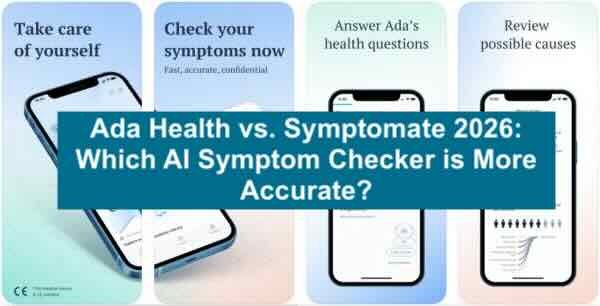
Choosing an AI symptom checker can feel like a gamble with your health information. You want something reliable, easy to use, and trustworthy, but how do you decide?
We ran identical symptom scenarios through both Ada Health and Symptomate to cut through the marketing claims. This detailed 2026 review compares their question flow, results, and overall experience to help you understand which app might be a better fit for your needs. Remember, these are triage and information tools, not diagnostic tools. For any serious health concern, always consult a medical professional.
How accurate and reliable are these AI tools?
Specialized tools like Ada or Symptomate are built on validated medical databases and are generally reliable for triage, though they can be overly cautious and miss rare conditions. General chatbots (e.g., ChatGPT) risk “hallucinations” (confident but incorrect info) since they’re not medically optimized. Imaging AI (e.g., Google DeepMind) excels in pattern recognition but depends on data quality. Overall, no AI is 100% accurate—use them to prepare questions for your doctor, not as standalone advice.
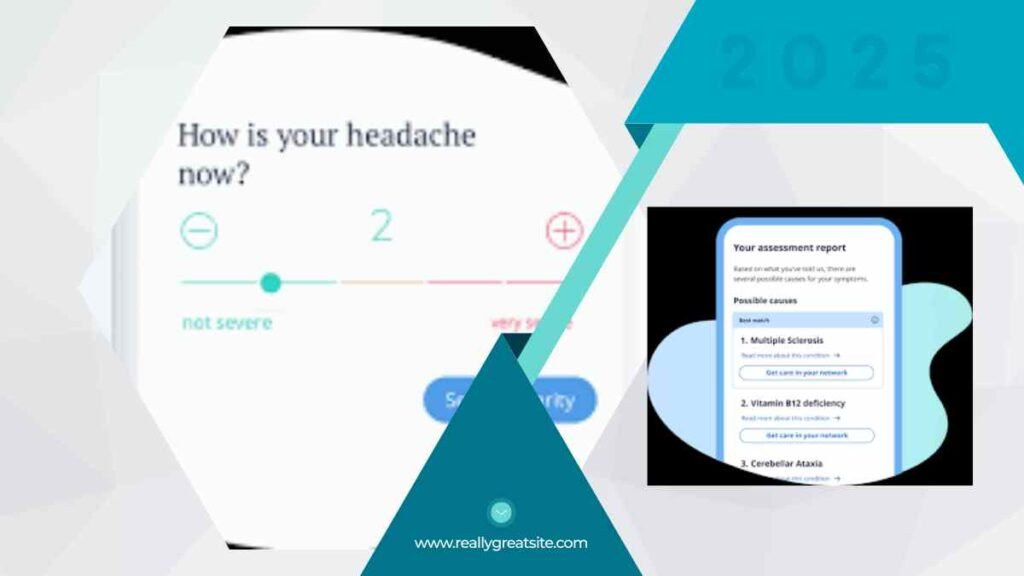
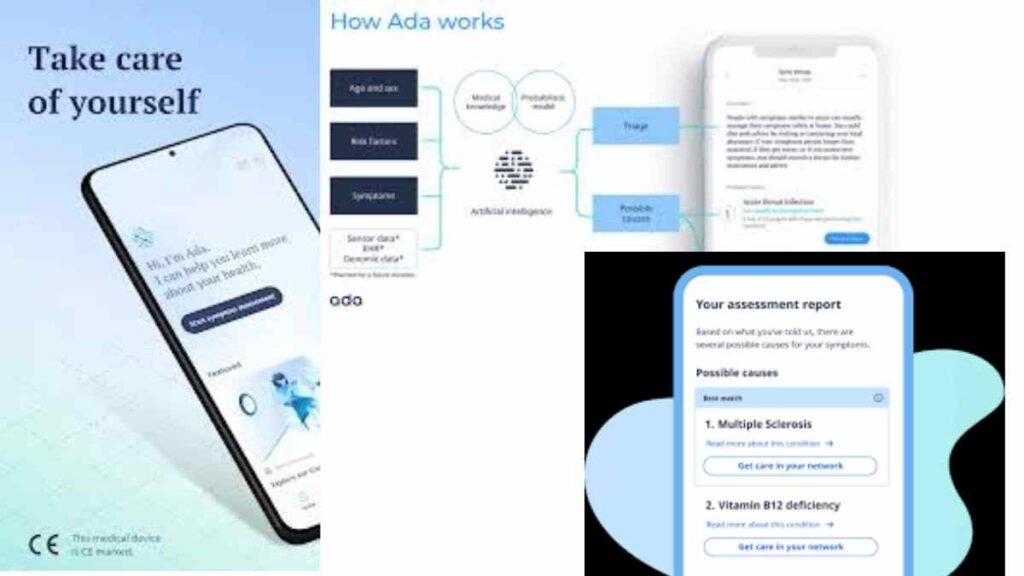
Head-to-Head Comparison: Ada vs. Symptomate
To make the differences clear, here’s a direct comparison of their key features and approaches.
| Feature | Ada Health | Symptomate |
|---|---|---|
| Primary Approach & Feel | Clinical & Comprehensive. Feels like a structured, detailed medical interview. | Streamlined & Direct. Focuses on rapid triage and quick guidance. |
| Question Depth & Personalization | Very high. Asks detailed follow-ups about medical history, lifestyle, and specific symptom characteristics. | Moderate. Gets to potential causes quickly with fewer personal history questions. |
| User Interface & Experience | Clean, professional, and guide-like. Can feel lengthy for minor concerns. | Simple, straightforward, and faster to complete. May feel less personalized. |
| Result Presentation | Provides a detailed, ranked list of possible conditions with explanations and “next step” advice. | Focuses on urgency level (e.g., “Emergency,” “See a doctor today”) and likely causes. |
| Cost Model (2026) | Freemium. Free core assessment. Optional paid subscription for health tracking, doctor chats, etc. | Free. Core symptom checking is completely free with no subscription required. |
| Best For | Users who want a thorough, clinical-feeling assessment and don’t mind spending more time. | Users who want a quick, free triage level and clear urgency guidance. |
🔍 Our Testing Method: We input identical sets of symptoms (e.g., persistent headache with nausea, minor rash, stomach pain) into both apps to compare the journey and outcomes. We evaluated question logic, result clarity, and the practical advice given.
The Core Difference: Philosophy in Action
The table shows the main difference isn’t about which one is “right,” but which approach you prefer.
- Ada acts like a detailed interviewer. It will ask about your stress levels, family history, and specific pain patterns. This can be reassuringly thorough for complex issues but may feel like overkill for a simple cold.
- Symptomate acts like a practical triage nurse. It aims to quickly categorize your risk level and point you toward the appropriate action (wait, call a doctor, go to ER). It’s efficient but may leave users with many questions wanting more detail.
⚠️ A Critical Note on “Accuracy”
Neither app provides a medical diagnosis. They offer possibilities based on algorithms. In our tests, for common symptoms, both apps suggested similar plausible conditions. However, their “accuracy” for a user lies in how well the process matches their need for detail or speed, and how clearly it guides them to the correct next step—which is always professional medical advice.
Privacy, Data & Safety
- Privacy Policies: Both apps have detailed privacy policies. Ada, being a more comprehensive health platform, collects more personal data for its optional services. Symptomate’s data use appears more focused on improving its core checker. Always review these policies before use.
- Safety First: Both apps correctly flagged symptoms that could indicate serious conditions (like chest pain) with urgent “seek immediate care” warnings. This is their most critical and consistent function.
Final Verdict: Which Should You Choose?
The best app depends entirely on what you’re looking for:
- Choose Ada Health if: You value depth and a clinical interview style. You’re comfortable spending 5-10 minutes on a check and appreciate detailed condition explanations. The freemium model with extra health tracking features appeals to you.
- Choose Symptomate if: You want a fast, free, no-frills triage tool. Your main goal is to quickly understand the potential urgency of your symptoms. You prefer simple, direct guidance over lengthy questionnaires.
Ultimately, the “best” AI symptom checker is the one you use cautiously as a starting point for a conversation with your doctor. For a complete overview of how to use all AI medical tools safely—including general chatbots and picture-based apps—refer to our main guide: AI Medical Diagnosis Tools in 2026: A Guide to Apps, Chatbots & Safety.
✅ Checklist Before Using Any Symptom Checker
- I understand this app does not provide a diagnosis.
- I will not delay emergency care (chest pain, difficulty breathing, severe injury) to use an app.
- I have reviewed the app’s privacy policy.
- I plan to discuss the app’s findings with a healthcare professional for a proper assessment.
Pro Tip: Use these apps to organize your thoughts before a doctor’s visit. The list of possible conditions and your noted symptoms can be a helpful starting point for a more efficient conversation with your physician.
Frequently Asked Questions
Which app is faster to get an answer from, Ada or Symptomate?
In our tests, Symptomate was generally faster. Its streamlined questionnaire gets to a triage recommendation more quickly. Ada takes longer because it asks more detailed, clinical follow-up questions. The choice depends on whether you prioritize speed or a more thorough assessment.
Is Ada Health worth the subscription fee compared to free Symptomate?
The free core symptom checker in both apps is robust. Ada’s paid subscription is only “worth it” if you specifically want its extra features: long-term health tracking, detailed health reports, or the option to consult with a doctor through the app. For one-off symptom checks, Symptomate’s free offering is often sufficient.
I got a “See a Doctor” recommendation. Which app’s advice should I trust more?
Trust the urgency guidance from either app. Both are designed with safety as the top priority and are calibrated to err on the side of caution. If either app recommends seeking professional care, you should take that seriously. The more detailed history from Ada may provide your doctor with better context.
I got a “See a Doctor” recommendation. Which app’s advice should I trust more?
This is expected due to their different algorithms and medical databases. Ada’s deeper questioning may uncover a subtle detail that changes the list of likely causes. This highlights a key point: the output is a list of possibilities, not a certainty. Discussing the results—especially any concerning conditions listed by either app—with a doctor is the crucial next step.
Can I use these apps for my child’s symptoms?
Yes, both offer pediatric symptom checkers. You will be guided to answer questions on behalf of your child. Always ensure you are using the dedicated child mode, as symptom profiles and risk assessments differ significantly from adults.