
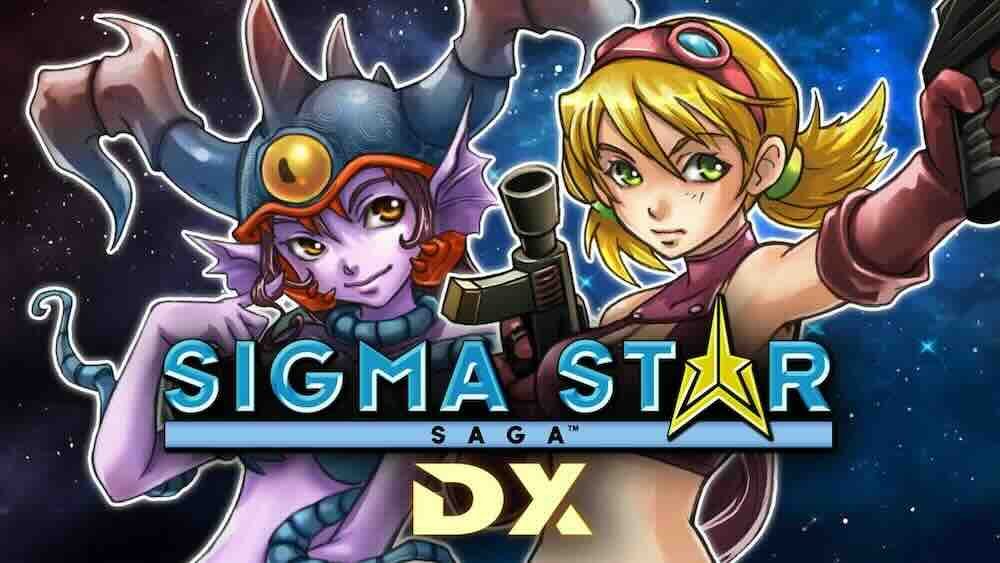
Sigma Star Saga DX Proves Retro Gaming is Booming — But AI is Quietly Doing What Remasters Can’t
On April 7, 2026, the cult-classic Game Boy Advance title Sigma Star Saga DX lands on PS5, Nintendo Switch, and PC. It’s a thoughtful remaster by Mighty Rabbit Studios and WayForward, complete with improved maps, extra save points, a handy rewind function, and that warm nostalgic feel — now nicely packaged for modern consoles.
And it really is lovely. The team did a great job.
But here’s what most of the gaming press isn’t talking about: While one GBA game gets the full red-carpet treatment, AI is quietly doing for the other 1,500+ titles in the GBA library what no official remaster has ever been able to achieve.
No huge development budget. No publisher approval. No 21-year wait.
Just smart machine learning, running on your laptop or handheld emulator, overcoming the original GBA hardware limitations from the outside.
And if the search trends from the last 30 days are any indication, more and more people are starting to notice.
What People Are Actually Searching: The GBA + AI Boom (March–April 2026)
Over the past month, interest at the intersection of Game Boy Advance and AI has surged. The trending queries fall into four clear categories — each showing a different way AI is reshaping how we play, improve, and even create retro games.
| Search Category | Trend Direction | Primary Driver |
|---|---|---|
| Emulator Coding | 🚀 Up 400% | GLM-5 24-hour challenge |
| Visual Upscaling | 📈 Up 150% | Switch 2 / DLSS speculation |
| Asset Generation | 📈 Up 80% | AI pixel art tools & Sprite Fusion |
| Translation Patches | 📈 Up 60% | AI-assisted fan translations |
Let’s break down what’s driving each trend — and why it matters for the future of GBA gaming.
1. The GLM-5 “24-Hour Challenge”: When AI Became a Real Engineer
The biggest buzz in the retro-AI space right now isn’t about playing games. It’s about building the software that lets us play them.
In February 2026, a technical demo went viral: the GLM-5 AI model built a fully functional Game Boy Advance emulator from scratch in just 24 hours.
Not a rough prototype — a complete emulator with CPU instruction decoding, memory mapping, graphics rendering, and audio synchronization. Written in JavaScript, it runs in the browser and can load and play real GBA ROMs like Pokémon.
The numbers are impressive:
- 700+ tool calls (editors, debuggers, test frameworks, performance analyzers)
- 800+ context switches between subsystems (CPU, memory, graphics, audio)
- 24+ hours of continuous work without losing momentum
Searches for “GLM-5 Game Boy emulator,” “AI built GBA emulator in 24 hours,” and similar terms spiked hard.
Why This Matters Beyond Retro Gaming: The Rise of Agentic AI
This isn’t just a cool stunt. It’s a clear sign of a bigger shift happening in 2026 — the move from simple chatbot AI to agentic, long-horizon AI: models that can tackle complex, multi-day projects on their own, using tools, debugging their own mistakes, and staying focused for hours or even days.
“The era of AI as conversation was transformative. The era of AI as continuous process — running in the background, pursuing goals across days — is just beginning.”
What this means for retro gaming: If AI can build a working GBA emulator in 24 hours, how long until it can take any GBA ROM and automatically create an enhanced version with HD assets, quality-of-life features, and modern platform support? The official Sigma Star Saga DX took months of human work. An AI agent could potentially do something similar — or even tackle the whole library — much faster.
2. AI Upscaling & The Switch 2 DLSS Debate
Another major trend is all about visuals — specifically, how Nintendo might handle its huge GBA library on the upcoming Switch 2.
The Switch 2 is expected to feature an NVIDIA Tegra T239 chip with dedicated Tensor cores for DLSS (Deep Learning Super Sampling) — the same AI upscaling tech used in high-end PC gaming.
This has sparked lively debates on Reddit and X: Should Nintendo use AI upscaling on GBA games, or strictly preserve the original pixel art?
Purists worry it will erase the intentional low-res charm of the GBA era. But for many players on modern displays, the real issue is visibility — on a big 4K TV, the original 240×160 resolution can look tiny and lost. AI upscaling isn’t about ruining the art; it’s about making these games enjoyable and playable again on today’s screens.
Emulators like RetroArch already offer real-time AI shaders (xBRZ, ScaleHQ) that intelligently clean up edges. The Switch 2 could bring similar enhancements system-wide.
What this means for retro gaming: The gap between an official remaster and what you can do yourself with AI-enhanced emulation is shrinking fast. Why wait years for one game to get the DX treatment when you can upgrade almost any ROM instantly?
3. AI Pixel Art Tools: Generating New GBA Games
The third trend isn’t just about replaying old games — it’s about creating new ones.
AI-powered tools that generate pixel art within the GBA’s strict limits (15-bit color, small sprite sizes, proper tile rules) are gaining real traction in the homebrew community. Describe what you want — like “a 32×32 silver-and-blue sci-fi spaceship for a GBA shoot-’em-up” — and get a ready-to-use sprite sheet that fits the hardware perfectly.
Combine this with AI code assistants that can write devkitARM-compatible code, and a solo developer can now build something that once required a small team.
What this means for retro gaming: The next cult-classic GBA-style game might come from a single person using AI as a creative partner — building something fresh on 25-year-old hardware, with no original to remaster.
4. Automated Translation: Unlocking Japan’s Lost GBA Library
The final trend is quieter but very important for preserving gaming history.
Hundreds of great GBA games never left Japan. AI has dramatically sped up fan translations, cutting the heavy lifting by a significant margin (around 70% faster for the initial work).
Large language models can batch-translate Japanese ROM text in minutes. The output still needs human review for nuance and cultural references, but what used to take five years can now be completed in roughly six months of polishing.
What this means for retro gaming: Sigma Star Saga was already in English, but AI could bring the next hidden Japanese gem to English players long before any official release.
The GBA’s Problem: Great Games, Tiny Resolution
The original Game Boy Advance launched in 2001 with a tiny 2.9-inch screen and 240×160 resolution. Those chunky pixels had charm back then. In 2026, on a 4K monitor or modern handheld, they often look like a blurry postage stamp.
Official remasters fix this the hard (and expensive) way. AI upscaling solves it in real time, for free, on any ROM you own.
The Bigger Picture: AI Didn’t Remaster Sigma Star Saga. It Doesn’t Need To.
Let’s be clear: Sigma Star Saga DX is a wonderful, respectful remaster, and the team deserves full credit.
But the bigger story is that AI has already made traditional “remasters” feel partly obsolete for anyone comfortable with emulation.
- Want sharper graphics? AI upscaling delivers it instantly on any game.
- Want a translation? AI makes the process dramatically faster.
- Want something new? AI helps generate assets and code for fresh GBA-style experiences.
- Want to understand the hardware? GLM-5 just showed what’s possible in a single day.
None of this requires a publisher or years of waiting. The GBA hardware is fixed forever, but everything around it — emulators, visuals, translations, and new creations — is evolving rapidly thanks to AI.
Sigma Star Saga DX is great. Yet AI is quietly building a world where waiting for official remasters isn’t the only option.
The future of retro gaming isn’t only official. It’s becoming increasingly algorithmic.
Want to try AI upscaling yourself? Download RetroArch, enable the xBRZ shader, and load any GBA game you own. The difference is often surprising.
Curious about the GLM-5 demo? Search “GLM-5 GBA emulator” — the technical reports and videos are still making waves in dev communities.
What GBA game would you most want to see AI-upscaled, newly translated, or expanded with fresh content? Drop your thoughts in the comments below.