
Stop asking AI to be “cinematic.” Start giving it a physical camera.
If you are still relying on generic adjectives like “cinematic,” “highly detailed,” and “8k” in your prompt architecture, you are leaving your final render entirely up to the model’s default settings.
I ran a controlled test to demonstrate the difference between relying on subjective keywords versus utilizing structural and technical orchestration. The exact same AI model and base subject were used. The results prove why precise technical direction is mandatory for high-end generation.
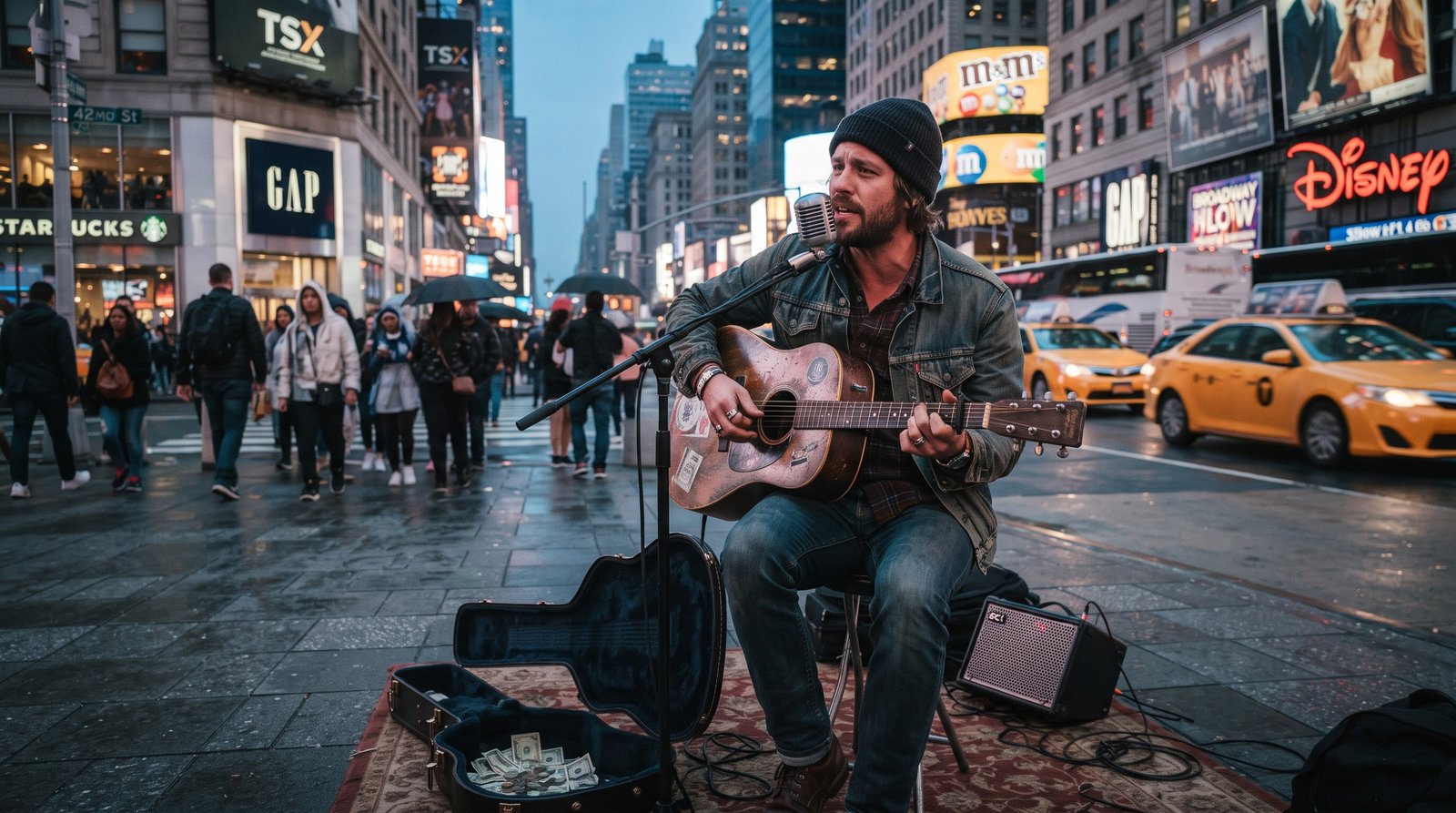
❌ The Generic Baseline
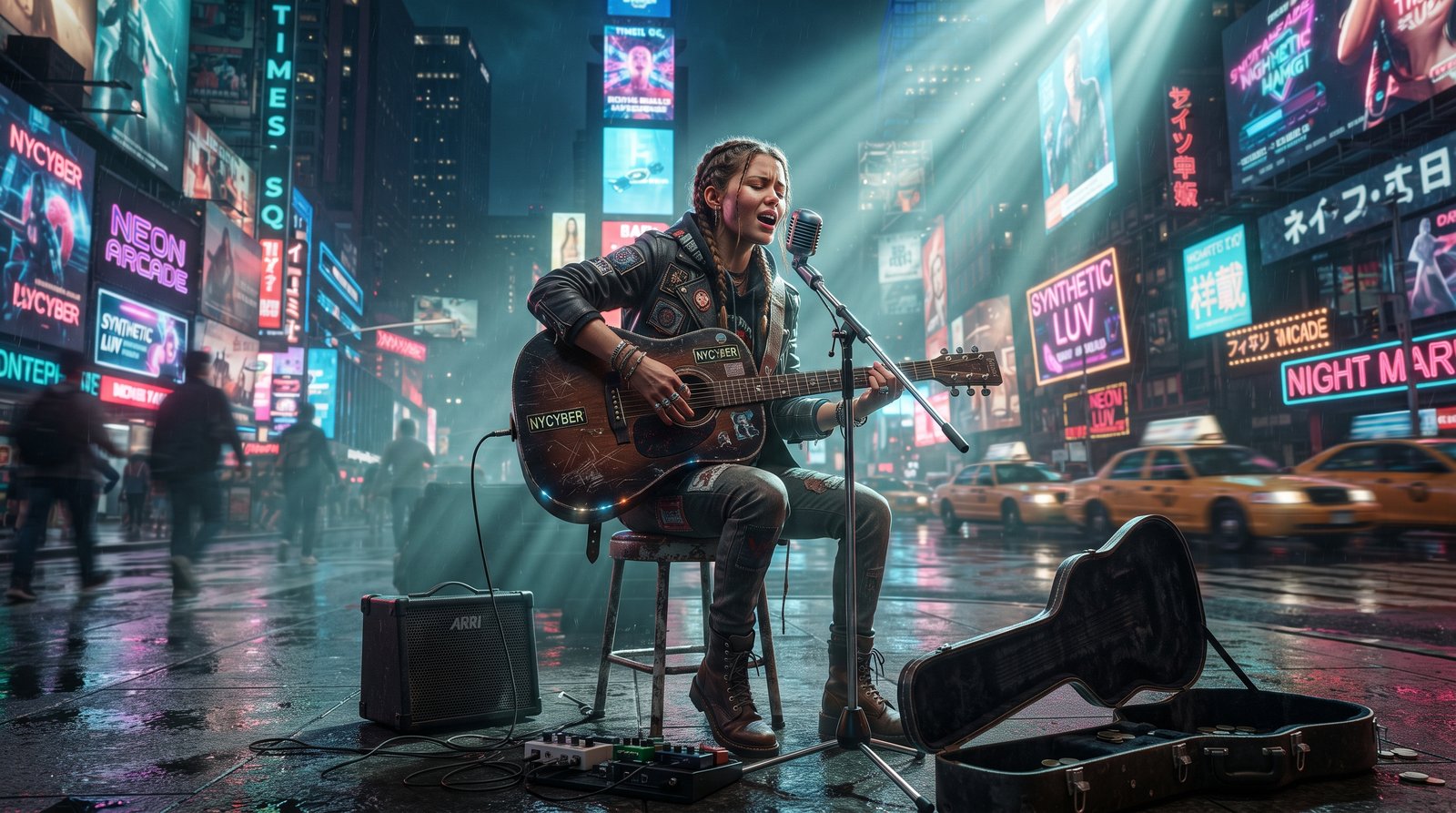
✅ The Technical Orchestration
The Baseline: Why Adjectives Fail
The first prompt relies on subjective descriptors. Without specific technical parameters, the AI defaults to standard focal depths and flat, ambient lighting calculations.
Prompt: “A street musician playing guitar in New York City, cinematic, highly detailed, 8k, intricate details, beautiful lighting, vibrant colors, photorealistic, award-winning photography”
The Output: A flat rendering. The model guessed the definition of “beautiful lighting.” It produced a high-quality stock photo, but provided the user with zero directorial control over the depth, contrast, or environmental atmosphere.
The Orchestration: Directing with Physics
The second test replaced subjective adjectives with a rigid specification of cinematic physics and lighting mechanics.
Prompt: “A street musician playing guitar in New York City, god rays cutting through the atmosphere, neon-drenched futuristic aesthetic, volumetric split key lighting with visible god rays and atmospheric depth, shot on ARRI Alexa LF with 85mm f/1.2 portrait prime lens, creamy bokeh and beautiful subject isolation, cyberpunk teal-orange grading with futuristic neon contrast and vibrant energy, cinematic composition, hyper detailed, photorealistic, intricate details, sharp focus, masterpiece, 8k resolution, raw rendering”
The Output: By specifying the ARRI Alexa LF and an 85mm f/1.2 lens, the model was forced to calculate a precise, shallow depth of field, resulting in true-to-lens subject isolation. The command for volumetric split key lighting provided exact instructions for how light should scatter in the atmosphere, establishing the dramatic depth.
The Engine: Structural Control
Consistently executing this level of control requires a structural framework. You need a system built to format lens profiles, rendering engines, and lighting setups correctly for specific AI platforms.
This is the utility provided by the Free AI Prompt Generator. It is designed to handle complex technical orchestration so you can define parameters rather than guessing keywords:
- Camera Physics: Select specific profiles ranging from Leica to ARRI.
- Lens Configuration: Define focal lengths and exact apertures (e.g., 85mm f/1.2) to dictate compression and depth of field.
- Lighting Mechanics: Apply exact terminology like volumetric lighting or split key setups.
- Platform Formatting: Generate structures optimized specifically for the syntax requirements of Midjourney, Flux, or Stable Diffusion.
⚡ Execute Technical Prompts
Access real camera physics, exact lens profiles, and precise lighting parameters.
Access the Generatortherightgpt.com/free-ai-prompt-generator/
🎯 Run the Parameters Test
Run your own controlled test. Construct a prompt utilizing a specific lens profile and lighting setup via the generator, and compare the render to a standard “cinematic” keyword prompt.